

At the dock, a family hears that its “half-day” deep-sea fishing trip includes a long offshore run, limited shade, and no guarantee that the crew will clean the catch. The boat may still be suitable, but the trip label has not answered the questions that determine whether the children will enjoy it. Families need to compare the passenger experience, not just the advertised hours and target fish.
Which deep-sea fishing charter format works best for families with children?
For most first-time families, the best deep-sea fishing format is the shortest staffed trip that provides crew help, age-appropriate equipment, shade, seating, and a toilet. The right choice depends on the children’s ages, passenger count, target species, and whether the booking is private, shared, or aboard a large-group headboat.
A “half-day” label does not reveal how much attention a child will receive at the rail. Before paying, compare minimum ages, passenger capacity, adult-supervision rules, non-angler fares, boarding deadlines, and the number of deckhands helping passengers. Every rider may count toward legal capacity even if that person never touches a rod.
Private fishing charters offer flexibility when the family needs control over pace and breaks
A private charter reserves the boat for one group, making it easier to request a shaded break, change fishing methods, accommodate food needs, or keep an anxious child close to a parent. Private service can justify the higher family price when young children need repeated help with bait, tangled lines, or a child-sized rod.
Private does not mean fully adjustable. The captain still controls the route for safety, weather, fuel, regulations, and realistic fishing conditions. An early return requested because a child feels sick may not produce a partial refund. Extending the trip may require advance approval and an added charge. Ask whether the quote assumes a passenger limit and whether substitutions are allowed.
A staffed fishing charter also differs from operating a rental boat. Families considering both options should compare a bareboat rental with a captained charter before treating the prices as equivalent.
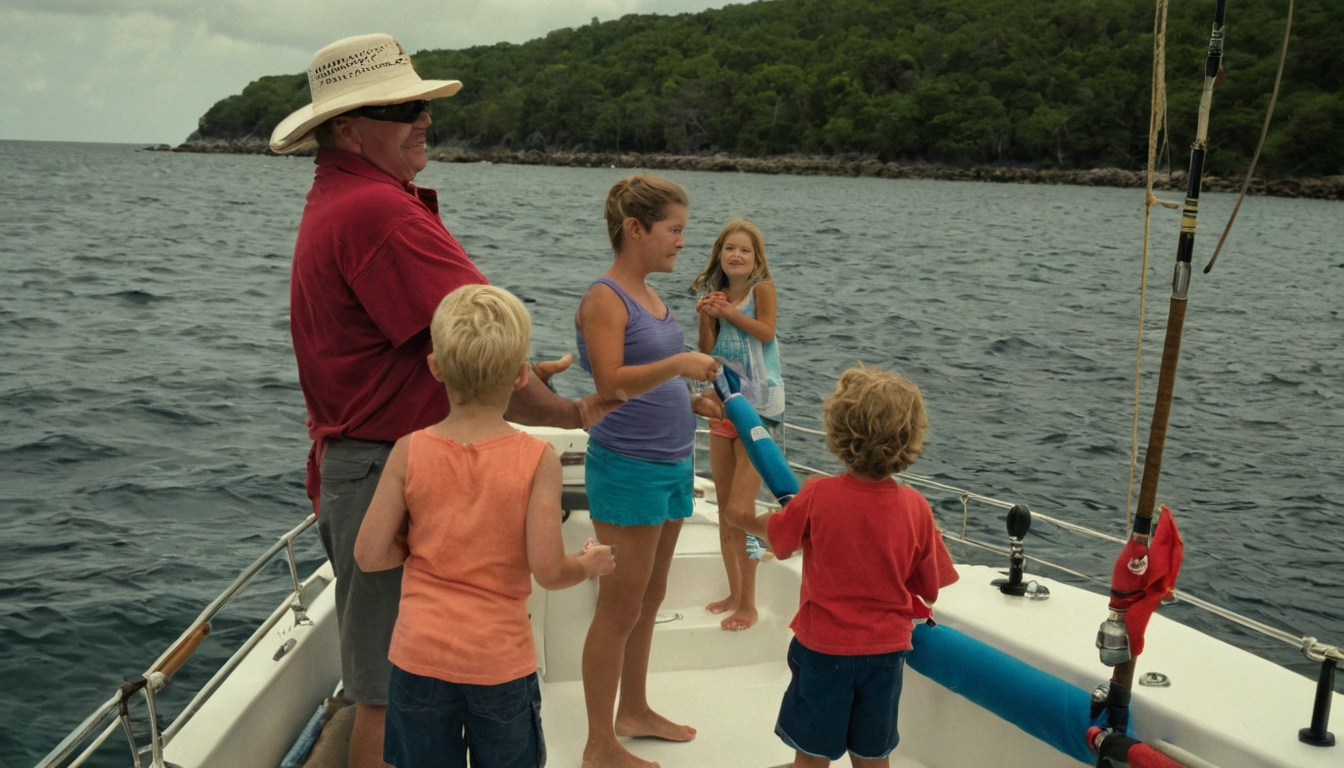
Which deep-sea fishing charter format works best for families with children shown with practical context cues.
Shared fishing charters and headboats cost less only under specific passenger and service conditions
Shared charters sell places to separate parties, while headboats typically carry a larger group on a fixed schedule. These formats can reduce the entry cost for a small family, but the savings matter only if child fares, non-angler tickets, equipment, bait, and required fees are included.
Shared deck space also means less control over fishing positions, departure times, return times, and crew attention. Ask whether family members sit together, whether tackle is assigned or shared, and who helps a child when several lines tangle at once. Once the format fits, compare how many dock-to-dock hours the children can manage.
How long should a family deep-sea fishing trip be?
A family should choose trip length by separating dock-to-dock duration from fishing time. Shorter trips limit fatigue and motion exposure, while longer trips make sense only when distant grounds or target species provide a clear advantage.
A short fishing charter is usually the safer first test for children new to offshore boats
A “half-day” label may not reveal whether the clock starts at check-in, departure, or the harbor entrance. Ask for the boarding deadline, expected transit each way, likely fishing time, and return time. Transit can change with the port, season, sea conditions, route, and boat speed.
- Choose the shortest trip that can still reach productive fishing grounds.
- Confirm the minimum age for that specific route and duration.
- Assess whether each child can follow crew instructions, wear required safety equipment, and remain engaged during long periods without fishing.
- Include non-anglers in the decision. Several hours of engine noise and rolling motion can feel much longer without a rod in hand.
First-time families should treat the initial charter like a test lap, not an endurance challenge. A successful shorter outing reveals attention span, boat comfort, and motion tolerance before the family commits to a full day.
Longer deep-sea fishing trips make sense when distance and target species justify the added time
A three-quarter-day, full-day, or extended booking should purchase access to a defined fishing area, technique, or legally available species. Ask how much additional fishing time the longer option normally provides, what happens if weather blocks the offshore route, and whether a shortened trip triggers a refund, credit, or no adjustment.
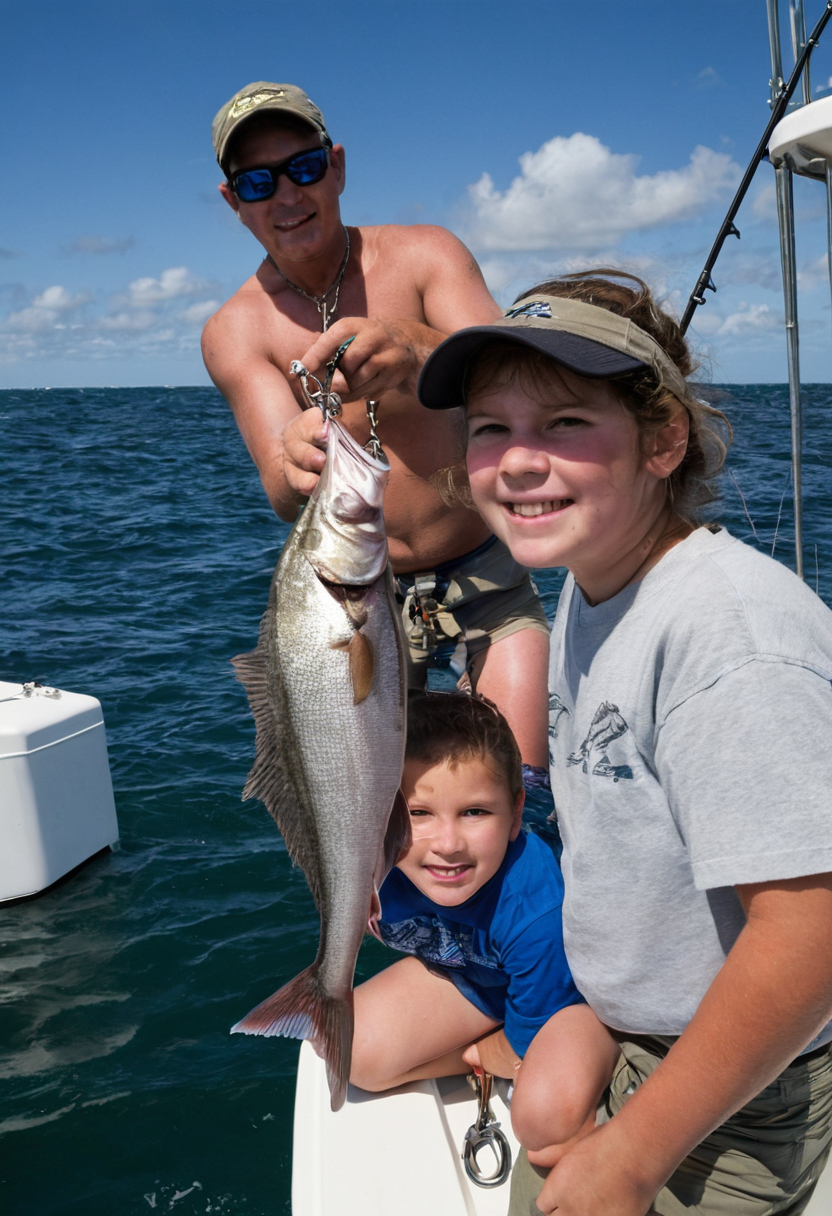
How long should a family deep-sea fishing trip be shown with practical context cues.
Return timing also affects catch handling. The FDA’s seafood storage guidance says seafood intended for use within two days should remain at 40°F or below; otherwise, it should be wrapped and frozen. Perishable seafood should not remain unrefrigerated beyond two hours, or one hour above 90°F. Confirm when cleaned fish enters ice or refrigeration, then inspect whether the boat can keep children comfortable for the selected duration.
What boat setup makes deep-sea fishing safer and more comfortable for kids?
A family-friendly fishing boat needs more than legal passenger capacity. Parents should verify protected seating, usable shade, stable rails, nonslip deck space, a functioning toilet, safe boarding access, and dry storage. The right setup changes with each child’s age and mobility, plus the trip’s exposure to heat, cold, and rain.
Families should verify the fishing boat’s toilet, shade, seating, and rail arrangement before paying
Ask for the vessel’s make, model, length, legal capacity, and applicable inspection or licensing status. Current photographs are more useful than “comfortable” in a listing because photographs can reveal the boarding gap, steps, seating position, bait station, and open transom.
- Toilet: Confirm that it is enclosed, operational underway, and reachable by a child or passenger with limited mobility.
- Protection: Check whether every passenger can reach shade, cabin shelter, or a protected seat during transit.
- Deck: Look for secure handholds, nonslip surfaces, and rails separating children from hooks, bait, and fish-handling areas.
- Access: Ask about dock ramps, boarding steps, wheelchair transfers, strollers, mobility devices, coolers, and bag storage.
For covered U.S. small passenger vessels, the passenger safety orientation addresses life-jacket locations, how to put life jackets on, and vessel-appropriate emergency instructions. Parents should also confirm child life-jacket availability by weight and the rules applying in the charter’s jurisdiction.
Included fishing equipment must be matched to a child’s size and skill level
An included rod is not necessarily a usable rod. Ask whether lighter rods, manageable reels, fighting belts, bait, and terminal tackle are available. Confirm whether deckhands will bait hooks, assist with casting, control swinging tackle, and handle landed fish.
Cold storage is also part of the vessel setup when passengers keep fish. Ask when catch goes onto ice and whether the boat can freeze it. FDA guidance recommends thawing frozen seafood gradually in a refrigerator overnight or, for faster thawing, in a sealed bag immersed in cold water. Once the boat and equipment fit the family, compare the forecast and route exposure.
How can families reduce seasickness and weather risk on a fishing charter?
Families can reduce, but not eliminate, seasickness risk by checking the marine forecast, choosing a shorter or more sheltered route, preparing food and fluids carefully, and discussing medication with a qualified clinician before departure.
Marine forecasts help families compare exposure but do not guarantee a smooth fishing trip
A marine forecast is a route-planning tool, not a universal go-or-no-go rule. The same conditions may feel manageable on a larger vessel running with the waves but uncomfortable on a smaller boat taking waves from the side. Ask how the predicted conditions affect the specific boat, fishing grounds, and travel direction.
- Wind: Ask about expected speed, direction, gusts, and sheltered portions of the route.
- Waves: Compare predicted wave height with wave period. Closely spaced waves can create rapid, repetitive motion.
- Storms: Check thunderstorm risk, marine advisories, and the forecast period covering departure and return.
- Route: Confirm how long the boat will remain in open water and whether the captain can switch fishing areas.
- Decision policy: Ask who cancels, when the decision is made, and how delays are communicated.
U.S. passenger-vessel requirements vary with vessel size and operating category. Subject to listed qualifications and exceptions, 46 CFR § 175.110 generally applies Subchapter T to vessels under 100 gross tons carrying more than six passengers, including at least one passenger for hire. Ask the operator which inspection and passenger-vessel rules cover the booked boat rather than judging oversight from appearance alone.
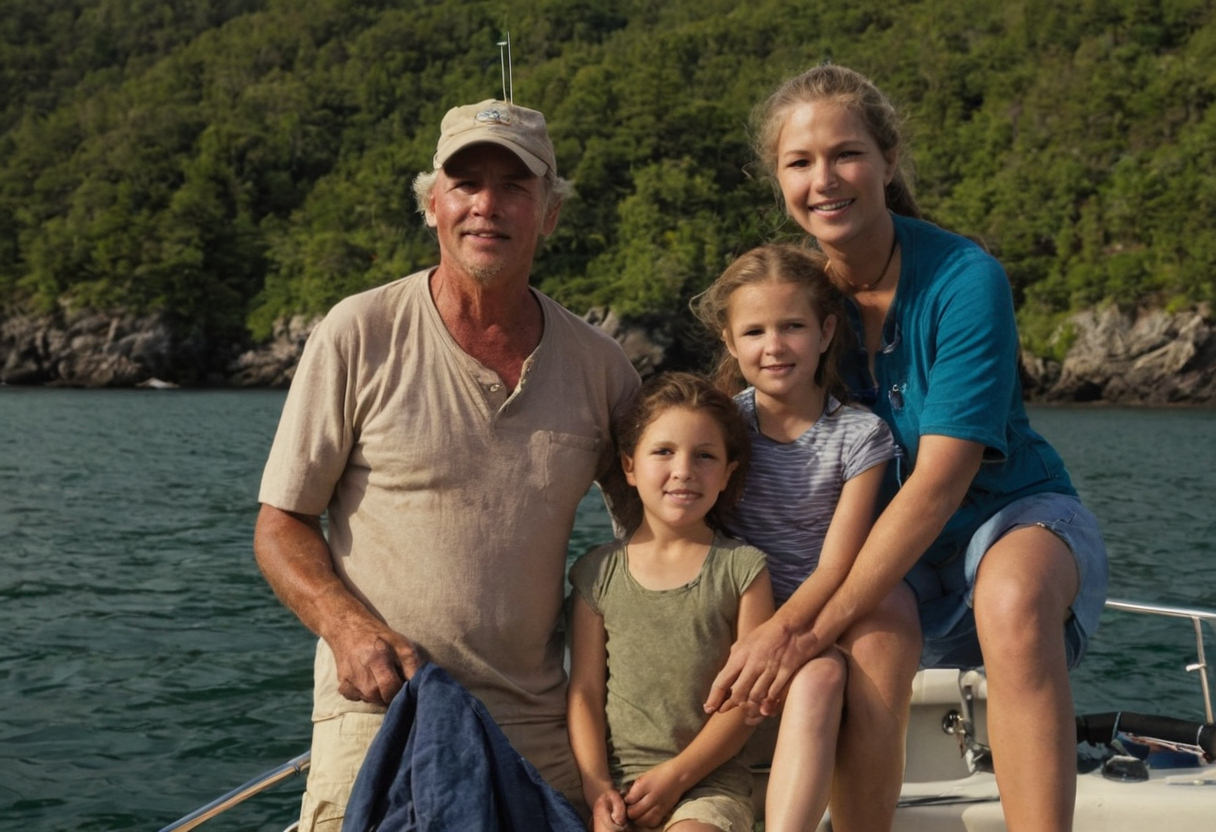
How can families reduce seasickness and weather risk on a fishing charter shown with practical context cues.
Booking terms matter because a captain may consider conditions safe while a family considers them too uncomfortable. Get written answers about captain-cancelled trips, customer cancellations, rescheduling, refunds, dock delays, shortened outings, and early returns caused by seasickness. On a private charter, ask whether one passenger’s early return ends the trip for everyone.
Motion-sickness medication for children requires age-specific medical guidance
Motion-sickness products differ in age restrictions, timing, side effects, interactions, and suitability for particular health conditions. A parent should consult the child’s clinician or pharmacist and read the product label rather than adapting an adult dose. The discussion should cover the child’s age, medical history, other medicines, trip duration, and possible drowsiness.
Non-drug preparation also helps. Offer a light, familiar meal, encourage hydration, avoid prolonged reading or screen use, and choose a shaded seat with fresh air and a view of the horizon. Pack spare clothes and sealable bags, and tell the crew at the first sign of nausea. After addressing motion risk, confirm what the family can legally keep.
What should families confirm about catch limits, fish cleaning, and catch-and-release?
A fishing charter does not guarantee that a family may keep every fish caught. Species, size, season, bag limits, protected status, and captain policy determine legal retention. Confirm license coverage, catch ownership, release procedures, cleaning services, cold storage, and processing fees.
Fishing licenses and catch limits depend on the charter’s jurisdiction, vessel status, species, and date
Ask whether the vessel or captain’s license covers passengers or whether each angler needs an individual license. Check current rules for the trip date and fishing area because state, territorial, and federal waters may have different seasons, size limits, bag limits, possession limits, and reporting requirements.
The operator should explain who receives a legal catch, whether fish are divided among passengers, and whether the crew retains any portion. For catch-and-release trips, ask how the crew measures fish, handles protected species, and releases unwanted or undersized catch.
Fish cleaning and take-home service can change the family’s post-trip schedule and cost
Confirm whether the crew, marina, or an independent processor cleans the fish and whether filleting, bagging, freezing, shipping, or disposal costs extra. Families also need a plan for immediate refrigeration, lodging storage, and transportation. Those services belong in the total trip price.
What is the true total cost of booking deep-sea fishing with kids?
The true family cost extends beyond the advertised fare. Compare quotes using the same passenger count, trip length, format, destination, season, cancellation terms, and included services.
Families should compare fishing-charter quotes with one all-in worksheet
- Base booking: Fare, passenger charges, taxes, harbor costs, fuel surcharges, booking fees, and card-processing fees.
- Likely extras: Parking, transportation, meals, drinks, licenses, equipment, gratuity, fish cleaning, packaging, and coolers.
- Payment risk: Deposit, final-payment deadline, cancellation window, no-show terms, and weather refund or credit policy.
- Comparison: Record the quote date, then calculate the total per family and per scheduled hour using identical assumptions.
A prebooking call should resolve the fishing charter’s child, weather, and catch policies
Ask the operator to confirm minimum ages, child life jackets, toilet access, shade, seating, dock-to-dock time, offshore transit, and crew help. Confirm who cancels for weather, what happens after an early return, and whether licenses, cleaning, food, coolers, or gratuities cost extra.
Request written confirmation for any answer missing from the booking terms. Book only after each finalist can be reduced to one comparable specification covering children, vessel, duration, weather, catch handling, and all-in price.
Deep-sea fishing with kids FAQ
How long is a typical deep-sea fishing trip, and how much time is spent traveling?
Trip lengths vary by operator and destination. Ask for dock-to-dock time and estimated transit each way because the advertised duration alone does not show fishing time.
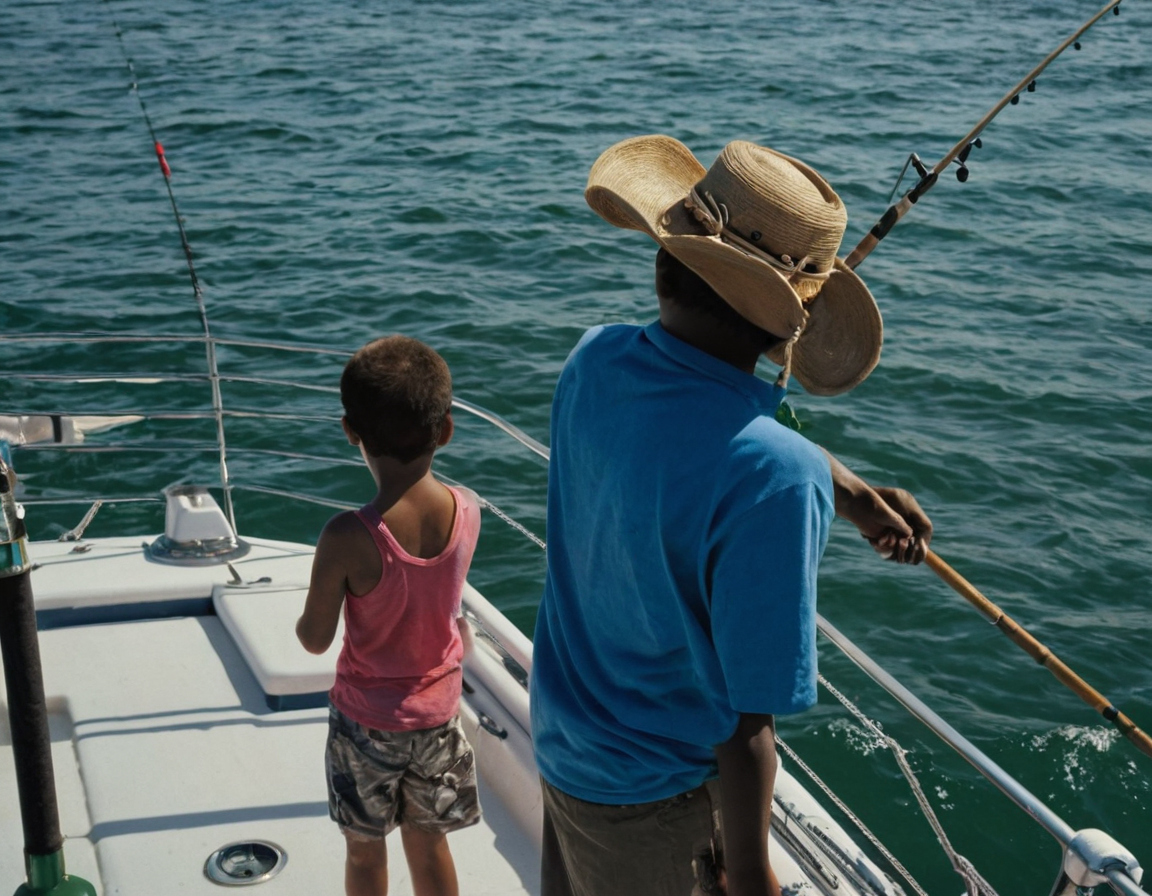
Deep-sea fishing with kids FAQ shown as an editorial planning reference.